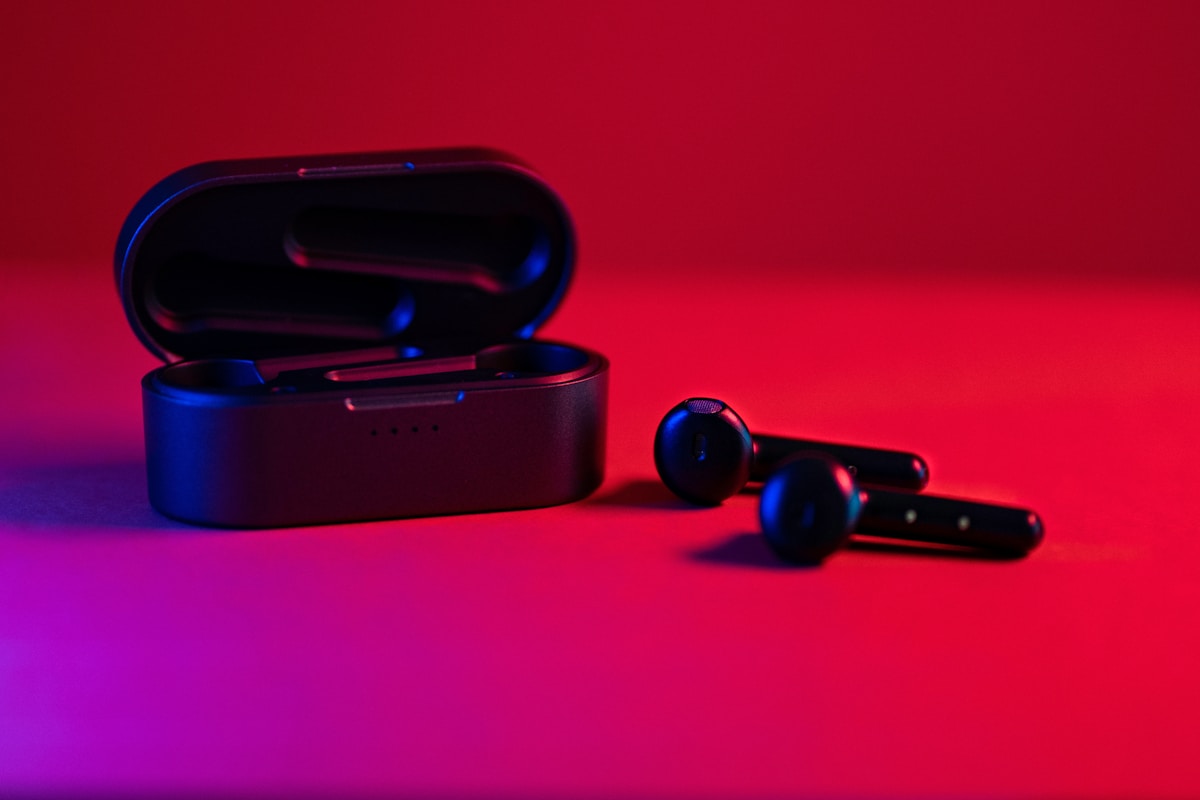
AirPods Pro 2 vs Sony WF-1000XM5: 2026 Flagship Earbuds Comparison
If you are choosing between the AirPods Pro 2 and the Sony WF-1000XM5, you have already decided you want good earbuds. The interesting part is that both are genuinely excellent, and the “winner” is mostly about which phone you live in.
I have used both as daily drivers for several months, alternating weeks, on an iPhone 15 Pro and a Pixel. Here is the honest split, including the part most comparisons leave out.
The honest split
- Noise cancellation: Sony is marginally better at raw attenuation, especially on low rumbles such as planes, trains, and air conditioning. AirPods are right behind and clearly better at handling wind and voice passthrough.
- Sound: Sony is the more neutral, detailed listen out of the box. AirPods are tuned warmer and bass-forward, which most people simply like more.
- Ecosystem: this is the real divider. On iPhone, AirPods pair, switch, and find themselves with zero friction. On Android, AirPods lose most of that magic and Sony becomes the obviously better pick.
- Fit and calls: the AirPods stem mic is still the best for walking-and-talking. Sony is close but wind-sensitive.
Noise cancellation in numbers, not adjectives
Both manufacturers quote impressive figures and neither is directly comparable. What matters is how they behave in the situations you actually encounter.
| Scenario | AirPods Pro 2 | Sony WF-1000XM5 |
|---|---|---|
| Airplane cabin drone | Very good | Best in class |
| Office chatter | Very good | Very good |
| Wind while walking | Best in class | Noticeable rustle |
| Traffic while crossing | Good, and safer | Slightly too effective |
That last row matters more than reviewers admit. The Sony’s ANC is so effective on low frequencies that it can mask approaching traffic and bicycle bells. I found myself pulling one bud out at crossings when wearing the Sonys, which is a genuine usability consideration.
For voice passthrough, the AirPods are noticeably more natural. Conversations with one bud in sound like a conversation. On the Sonys, voices have a slightly processed quality, though it is better than the previous generation.
Sound: neutral versus pleasant
The Sony tuning is the more technically correct one. It has better separation, a flatter response, and reveals more detail in acoustic and classical material. If you listen analytically, Sony wins.
The AirPods tuning is warmer, with a bass lift and a gentle upper-mid bump. It is less accurate and more enjoyable for pop, hip-hop, and podcasts, which is what most people actually listen to.
Here is the practical advice: use the EQ. Both buds respond well to in-app equalization, and you can close most of the gap from either direction. The default AirPods tuning with a slight bass reduction sounds closer to the Sony curve. The Sony with a bass boost sounds closer to the AirPods.
Do not buy either expecting a transformative difference. The gap between these two is smaller than the gap between either and a $70 pair of well-tuned Chinese buds.
Ecosystem: the actual deciding factor
This is where the choice is genuinely made for you.
If you use an iPhone, iPad, and Mac: the AirPods are not really competing. Automatic switching between devices, the shared pairing, Find My integration, and spatial audio with head tracking are all seamless. Nothing from Sony comes close to this experience, and it is not a feature you can replicate with a third-party app.
If you use Android: most of the AirPods’ advantages vanish. You lose automatic switching, you lose the ambient spatial audio integration, and you lose the quick pairing. The Sonys get the LDAC codec, which the iPhone does not support at all.
If you use both: the AirPods’ switching is more valuable, but the Sony’s cross-platform consistency is better. The AirPods behave like a dumb Bluetooth headset on Android, which is a genuinely frustrating experience.
Codec reality check
This is the most commonly misunderstood part of the comparison.
Q: Does the iPhone support LDAC? No. The iPhone supports AAC only, plus Apple’s own spatial audio. That means the Sony WF-1000XM5 runs on AAC when connected to an iPhone, and its LDAC advantage is entirely unavailable.
Q: Does that matter? For most people, barely. AAC at a good bitrate is transparent for most listening. For people who specifically want high-resolution audio, buying the Sonys to use with an iPhone is paying for a feature your phone will ignore.
If you have an Android phone with LDAC support and a streaming service with lossless tiers, the Sonys make more sense. On iPhone, the codec argument is a wash.
The part the comparison leaves out
Both cost $200 to $250. There is a meaningful amount of logo tax in that number.
SoundPEATS and QCY — two Shenzhen audio companies — deliver roughly 80 percent of the ANC and sound quality for a third of the price. SoundPEATS’ flagship TWS sits around $50 to $70 and is the “recommended to a friend” pick more often than either flagship in my circle. QCY covers the $20 to $30 floor without embarrassment.
What you actually give up at $60:
- The last 10 to 15 percent of ANC effectiveness, mostly on very low frequencies
- Some transparency-mode naturalness
- Brand-name app polish and firmware update cadence
- Resale value, if that matters to you
What you do not give up: fit, comfort, water resistance, basic ANC, call quality, and the vast majority of sound quality.
You are not missing a secret chip. You are paying for branding, retail margins, and seamless ecosystem glue. If that glue matters to you, AirPods earn it. If it does not, the Chinese options are the smarter money.
Chinese brands worth a look
- SoundPEATS — the best ANC-per-dollar I have tested, with genuinely good tuning in the $50 to $70 band. Shenzhen-based audio brands like Soundcore and SoundPEATS have closed the gap in active noise cancellation dramatically.
- QCY — the budget floor, and surprisingly competent at $25.
- Xiaomi — their Buds line integrates with the Mi ecosystem and offers solid ANC at mid-tier prices.
- Baseus — a strong alternative if you want a known brand name at a lower price point.
Honest caveats
- Fit is personal. Try before you commit $250. A $40 pair that seals properly beats a $250 pair that does not, every single time.
- Codec support. Do not pay for LDAC if your phone does not support it.
- Battery fades on all of them. Flagships are not magically more durable. Expect 2 to 3 years before capacity drops noticeably.
- Ear tips matter more than drivers. Buy a set of third-party foam tips and you will improve either pair more than any software setting.
My take
Buy the AirPods Pro 2 if you are deep in the Apple ecosystem and hate friction. The switching and integration are genuinely worth the premium, and nothing else replicates it.
Buy the Sony WF-1000XM5 if you are on Android, or if you care most about raw ANC and neutral sound. It is the more technically accomplished product.
But if you just want great wireless sound without the premium, a SoundPEATS gets you most of the way there for the price of a nice dinner. That is the honest recommendation for most people who are not locked into an ecosystem.
Disclosure: if you order through our link, TechMinds may earn a small commission at no extra cost to you.