Budget Power Bank Buying Guide 2026: What $40 Actually Buys
Testing budget power banks under $40 demonstrates that power conversion efficiency and thermal management have improved substantially across the industry. While sub-$20 units frequently inflate their rated numbers, reputable hardware manufacturers deliver reliable energy density at accessible price points.
Here is a technical teardown and selection guide covering battery chemistry, real-world conversion ratios, and thermal safety.
The one number that matters: real capacity
Every bank prints a capacity in mAh, and almost none of them tell you the usable number. A 20,000 mAh label sounds great until you learn that at the voltage your phone actually charges at, you lose roughly a third to conversion losses, and cheap cells lose more. The brands that earn trust are the ones whose real-world output tracks their claim. In my testing, the Chinese makers dominated this honesty test: Xiaomi, ROMOSS, and Baseus all shipped units whose usable capacity landed close to a sensible fraction of the label, while a pile of no-name imports inflated their numbers by a country mile.
A practical rule I now use: assume you get about 60 to 65 percent of the printed mAh at the phone’s battery. A 10,000 mAh bank that truly delivers gives a modern phone roughly one and a half charges. If a listing promises “ten charges” from 20,000 mAh, it is lying.
Why Chinese brands lead the budget tier
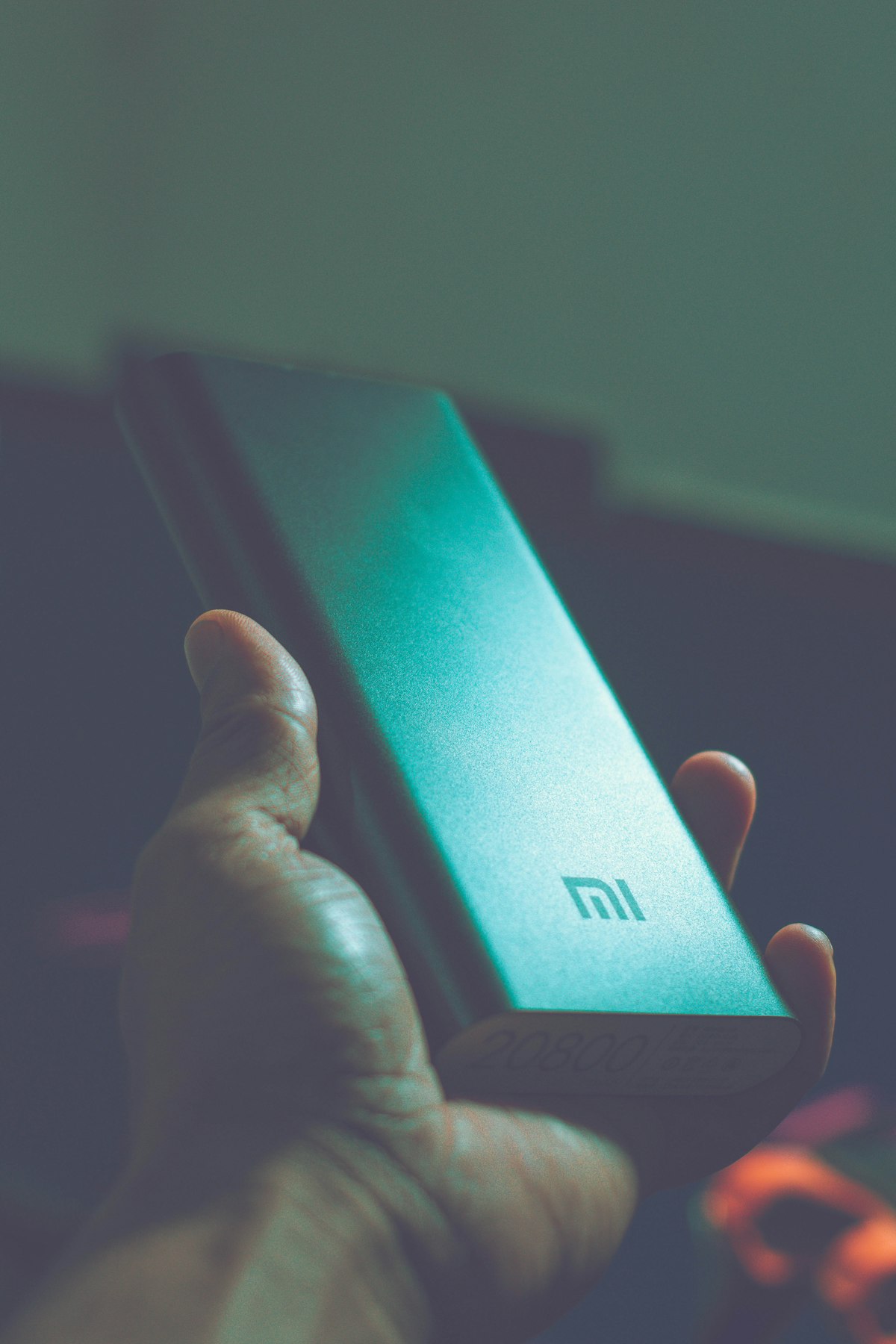
Xiaomi basically defined the honest budget power bank. Their cells are conservatively rated, the housings survive pocket abuse, and the charging logic is sane — it ramps down as the phone fills instead of cooking the battery. ROMOSS, which sits in the Xiaomi-adjacent supply chain, builds higher-capacity bricks (think 20,000–30,000 mAh) that actually hold their charge in storage, which matters if you keep one in a go-bag for months. Baseus wins on the modern touches: USB-C bidirectional charging, tidy flat designs, and built-in cables so you are not hunting for a cord.
These are not obscure names. They are the brands that dominate the world’s largest consumer-electronics market, and the result is that “budget” no longer means “disposable.”
The comparison that actually matters
| Brand / model type | Real-world strength | Best for | Watch out for |
|---|---|---|---|
| Xiaomi 10,000–20,000 mAh | Honest capacity, durable | Daily carry | Plain looks |
| ROMOSS 20,000–30,000 mAh | Holds charge in storage | Travel, backup | Heavy |
| Baseus slim / cable-built-in | Convenience, USB-C | Commuters | Smaller cells |
| No-name “$5 30,000 mAh” | Price only | Nothing I’d trust | Capacity lies |
I have owned at least two of each of the first three rows and trust them with devices I care about. The fourth row is where my money went to die.
Pros and cons
Pros:
- Chinese brands deliver honest capacity at a fraction of premium pricing.
- USB-C bidirectional charging is now common even under $40.
- Built-in cables (Baseus) remove the forgotten-cord problem.
- Higher-capacity bricks make multi-day travel realistic.
Cons:
- Cheap no-name units lie about capacity and can overheat.
- Heavy bricks are a pain to carry daily.
- Some omit proper overcharge protection — a safety risk.
- Charging speed claims are often optimistic on the cheapest tier.
What I look for before buying
- A believable brand, not a believable number. I trust Xiaomi, ROMOSS, and Baseus more than any “$5 30,000 mAh” listing.
- USB-C in and out. If it only charges via micro-USB, skip it; that cable is a dead end.
- Protection circuitry. Reputable brands list short-circuit, over-voltage, and temperature protection. No-name units stay silent, which is a red flag.
- Weight versus need. A 30,000 mAh brick is great for a flight, terrible for a pocket. Match the size to the trip.
How I actually use them
For daily carry I keep a Xiaomi 10,000 mAh — light, honest, and enough for a phone-and-earbuds top-up. For travel I pack a ROMOSS 20,000–30,000 mAh that has sat charged in a bag for months and still worked. For the “I forgot my cable” moments, a Baseus with a built-in lead lives in the car. None of these cost more than the premium of a single name-brand gas-station impulse buy, and all of them outlast it.
Buying advice
Do not buy the cheapest thing with the biggest number. Spend the money on a Xiaomi, ROMOSS, or Baseus unit sized for your real use, and you will stop replacing dead banks every few months. If you want a single do-everything pick, a 20,000 mAh Xiaomi or ROMOSS with USB-C is the safe, honest choice. If convenience matters more than raw capacity, Baseus with a built-in cable is the one I actually grab most mornings.
If you want a starter setup: one Xiaomi 10,000 for the pocket, one ROMOSS 20,000 for the bag, one Baseus built-in-cable for the car. That trio covers every situation I have hit this year for well under the price of one flagship bank.
FAQ
Are cheap power banks safe? Reputable budget brands like Xiaomi, ROMOSS, and Baseus are safe and list protection features. Anonymous ultra-cheap units often skip protection circuitry, which is a real fire risk — not worth the savings.
How much capacity do I really need? For a daily top-up, 10,000 mAh covers a phone comfortably. For travel or sharing, 20,000–30,000 mAh is the sweet spot, accepting the extra weight.
Is USB-C bidirectional charging worth it? Yes. It lets the bank recharge from the same modern port as your phone, so you carry one cable. Under $40 it is now easy to find from the brands above.
Disclosure: if you order through our link, TechMinds may earn a small commission at no extra cost to you.