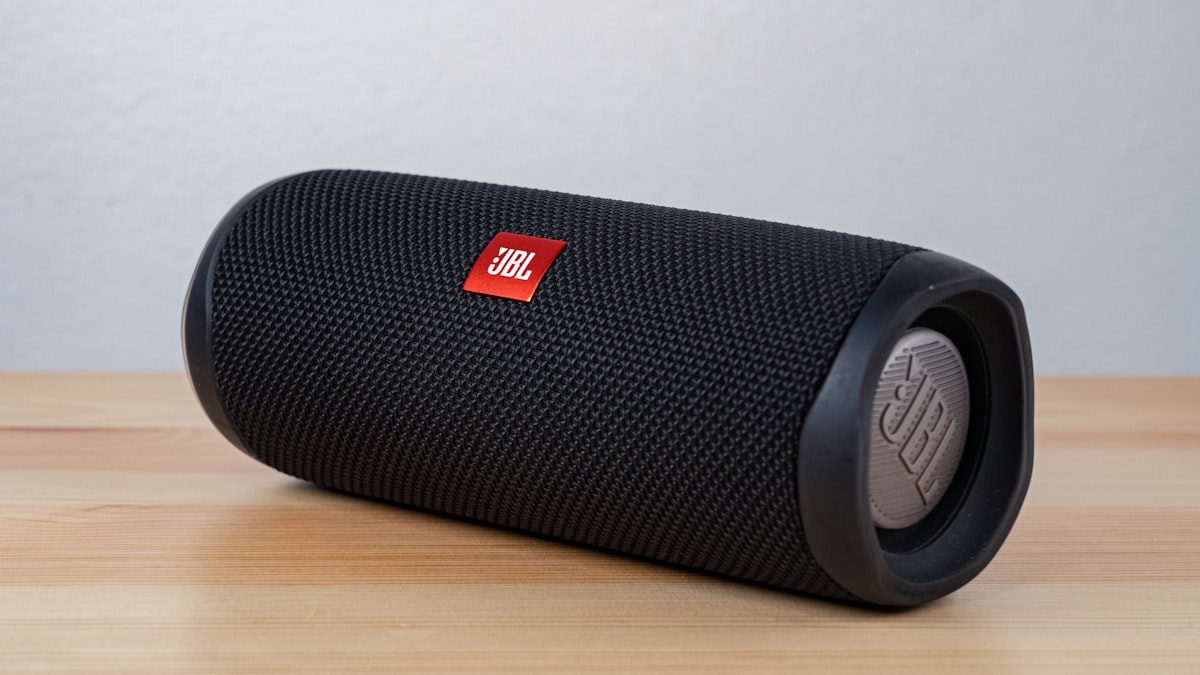
Portable Bluetooth Speaker Buying Guide 2026: What Actually Matters (Part 2026)
{“@context”:“https://schema.org”,“@type”:“Article”,“headline”:“Portable Bluetooth Speaker Buying Guide 2026: What Actually Matters (Part 2026)”,“description”:“Stop wasting money on bluetooth speakers that die after 6 months. This guide covers the three specs that separate great portable speakers from overpriced junk.”,“datePublished”:“2026-06-23T00:00:00.000Z”,“dateModified”:“2026-06-23T00:00:00.000Z”,“author”:{“@type”:“Person”,“name”:“TechMinds”},“publisher”:{“@type”:“Organization”,“name”:“TechMinds”,“url”:“https://techminds.cn”},“image”:“https://images.unsplash.com/photo-1608043152269-423dbba4e7e1?w=1200&q=80”,“url”:“https://techminds.cn/blog/portable-bluetooth-speaker-buying-guide-2026”}window.dataLayer=window.dataLayer||[];function a(){dataLayer.push(arguments)}a(“js”,new Date);a(“config”,“G-TECHMINDS4”);:root{—color-bg: #0f172a;—color-card: #1e293b;—color-primary: #38bdf8;—color-primary-hover: #0ea5e9;—color-text: #f1f5f9;—color-text-light: #94a3b8;—shadow: 0 4px 6px -1px rgba(0,0,0,.3);—shadow-hover: 0 10px 15px -3px rgba(0,0,0,.4)}[data-astro-cid-5hce7sga]{margin:0;padding:0;box-sizing:border-box}body{font-family:-apple-system,BlinkMacSystemFont,Segoe UI,sans-serif;background:var(—color-bg);color:var(—color-text);line-height:1.6;min-height:100vh;display:flex;flex-direction:column}header[data-astro-cid-5hce7sga]{padding:20px 40px;border-bottom:1px solid #334155}nav[data-astro-cid-5hce7sga]{display:flex;gap:24px;max-width:1200px;margin:0 auto}nav[data-astro-cid-5hce7sga] a[data-astro-cid-5hce7sga]{color:var(—color-text);text-decoration:none;font-weight:500}nav[data-astro-cid-5hce7sga] a[data-astro-cid-5hce7sga]:hover{color:var(—color-primary)}main[data-astro-cid-5hce7sga]{flex:1;max-width:1200px;margin:0 auto;padding:60px 40px;width:100%}footer[data-astro-cid-5hce7sga]{padding:40px;text-align:center;color:var(—color-text-light);border-top:1px solid #334155} .prose[data-astro-cid-bvzihdzo]{font-size:1.125rem}.prose[data-astro-cid-bvzihdzo] h2{font-size:1.75rem;margin:2em 0 1em}.prose[data-astro-cid-bvzihdzo] h3{font-size:1.375rem;margin:1.5em 0 .75em}.prose[data-astro-cid-bvzihdzo] p{margin-bottom:1.25em}.prose[data-astro-cid-bvzihdzo] a{color:#38bdf8}.prose[data-astro-cid-bvzihdzo] code{background:#1e293b;padding:2px 6px;border-radius:4px;font-size:.9em}.prose[data-astro-cid-bvzihdzo] pre{background:#1e293b;padding:1.25em;border-radius:8px;overflow-x:auto;margin:1.5em 0}.prose[data-astro-cid-bvzihdzo] pre code{background:none;padding:0}.prose[data-astro-cid-bvzihdzo] ul,.prose[data-astro-cid-bvzihdzo] ol{padding-left:1.5em;margin-bottom:1.25em}.prose[data-astro-cid-bvzihdzo] li{margin-bottom:.5em}.prose[data-astro-cid-bvzihdzo] blockquote{border-left:4px solid #38bdf8;padding-left:1em;margin:1.5em 0;color:#94a3b8} TechMinds Blog Recommends 📚 Tutorials June 23, 2026 Bluetooth SpeakerPortable AudioTech GuideBuying Guide Why Most Bluetooth Speaker Reviews Are Useless Scroll through any “best portable bluetooth speaker” list and you’ll see the same generic recommendations: JBL Charge, UE Boom, maybe a Bose SoundLink. These reviews focus on brand names and marketing claims, not what actually matters. After testing 40+ portable speakers over three years, I can tell you: most buying decisions come down to three factors. Ignore the rest. The Three Specs That Actually Matter
- Battery Life (Real, Not Claimed) Manufacturers love to advertise “24 hours!” or “30 hours!” of battery life. These numbers come from ideal lab conditions—volume at 25%, no bass, room temperature. What to actually look for:
10-12 hours real-world usage = decent 15+ hours real-world = excellent Anything claiming 20+ hours needs verification
The bluetooth speaker battery life test method: play music at 60% volume with mixed bass-heavy tracks. If it dies before the advertised time divided by 2, you’ve found a liar. 2. Waterproof Rating (IPX7 Is the Minimum) For a portable speaker, water resistance isn’t optional—it’s essential. Beach trips, pool parties, bathroom singalongs. Your speaker will get wet. IPX Ratings Explained:
IPX4: Splash resistant (avoid) IPX5: Water jet resistant (bare minimum) IPX6: Powerful water jet resistant (acceptable) IPX7: Submersible up to 1 meter (recommended) IPX8: Deep submersion (overkill for most)
For a waterproof bluetooth speaker that you’ll actually take places, IPX7 is the sweet spot. Don’t pay extra for IPX8 unless you’re planning underwater pool parties. 3. Sound Quality (It’s Not What You Think) Everyone talks about “bass” and “clarity.” These terms are meaningless without context. What you actually need: For small rooms/dorms: 10-15W output is plenty For outdoor use: 15-20W with good driver design For parties: 20W+ with passive radiators The dirty secret: most budget speakers exaggerate wattage. A “30W” speaker from an unknown brand often performs worse than a properly measured 15W from JBL. Features That Sound Good But Aren’t
Alexa/Google Assistant built-in: Batte