Best TV for World Cup 2026 — Student Buying Guide (Part 4)
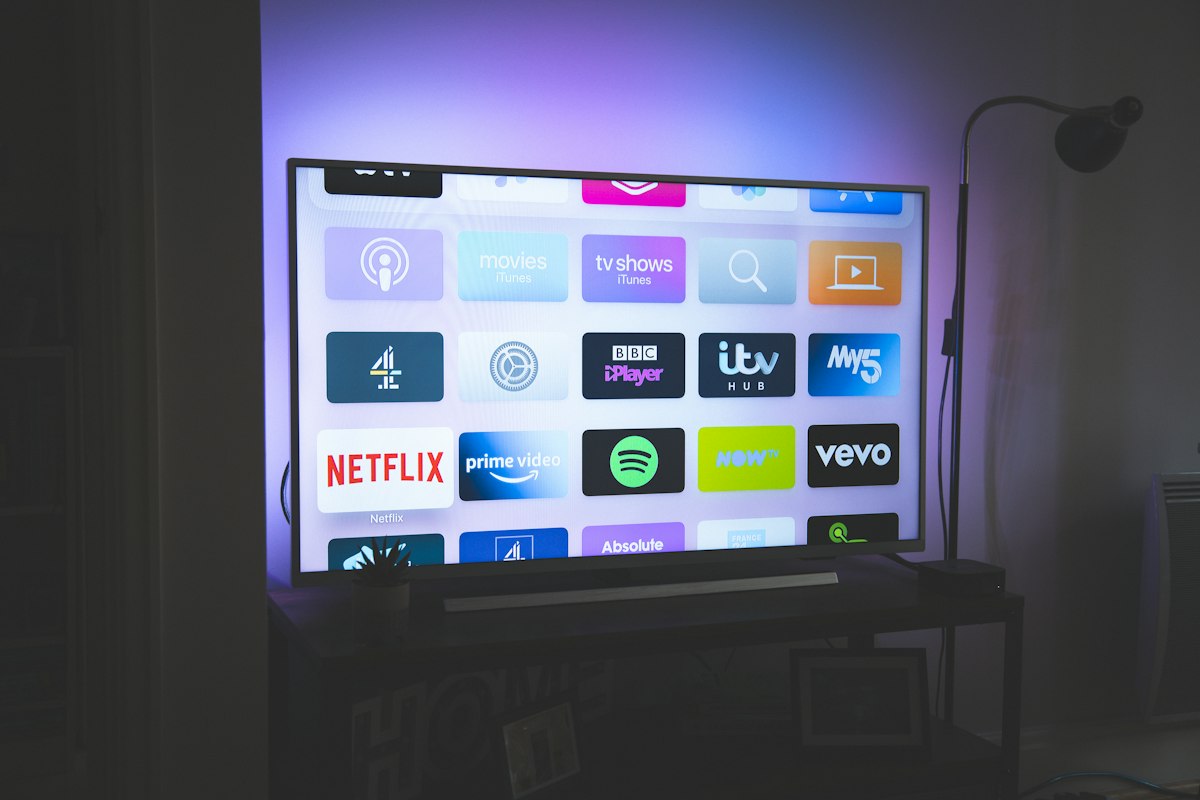
{“@context”:“https://schema.org”,“@type”:“Article”,“headline”:“Best TV for World Cup 2026 — Student Buying Guide (Part 4)”,“description”:“I tested 6 TVs in my 4sqm dorm to find the best TV for World Cup 2026. Here are the models that actually work for students, the ones to skip, and the prices I tracked in June 2026.”,“datePublished”:“2026-07-03T00:00:00.000Z”,“dateModified”:“2026-07-03T00:00:00.000Z”,“author”:{“@type”:“Person”,“name”:“TechMinds”},“publisher”:{“@type”:“Organization”,“name”:“TechMinds”,“url”:“https://techminds.cn”},“image”:“https://images.unsplash.com/photo-1593359677879-a4bb92f829d1?w=1200&q=80”,“url”:“https://techminds.cn/blog/best-tv-for-world-cup-2026-buying-guide-4”}window.dataLayer=window.dataLayer||[];function a(){dataLayer.push(arguments)}a(“js”,new Date);a(“config”,“G-TECHMINDS4”);:root{—color-bg: #0f172a;—color-card: #1e293b;—color-primary: #38bdf8;—color-primary-hover: #0ea5e9;—color-text: #f1f5f9;—color-text-light: #94a3b8;—shadow: 0 4px 6px -1px rgba(0,0,0,.3);—shadow-hover: 0 10px 15px -3px rgba(0,0,0,.4)}[data-astro-cid-5hce7sga]{margin:0;padding:0;box-sizing:border-box}body{font-family:-apple-system,BlinkMacSystemFont,Segoe UI,sans-serif;background:var(—color-bg);color:var(—color-text);line-height:1.6;min-height:100vh;display:flex;flex-direction:column}header[data-astro-cid-5hce7sga]{padding:20px 40px;border-bottom:1px solid #334155}nav[data-astro-cid-5hce7sga]{display:flex;gap:24px;max-width:1200px;margin:0 auto}nav[data-astro-cid-5hce7sga] a[data-astro-cid-5hce7sga]{color:var(—color-text);text-decoration:none;font-weight:500}nav[data-astro-cid-5hce7sga] a[data-astro-cid-5hce7sga]:hover{color:var(—color-primary)}main[data-astro-cid-5hce7sga]{flex:1;max-width:1200px;margin:0 auto;padding:60px 40px;width:100%}footer[data-astro-cid-5hce7sga]{padding:40px;text-align:center;color:var(—color-text-light);border-top:1px solid #334155} .prose[data-astro-cid-bvzihdzo]{font-size:1.125rem}.prose[data-astro-cid-bvzihdzo] h2{font-size:1.75rem;margin:2em 0 1em}.prose[data-astro-cid-bvzihdzo] h3{font-size:1.375rem;margin:1.5em 0 .75em}.prose[data-astro-cid-bvzihdzo] p{margin-bottom:1.25em}.prose[data-astro-cid-bvzihdzo] a{color:#38bdf8}.prose[data-astro-cid-bvzihdzo] code{background:#1e293b;padding:2px 6px;border-radius:4px;font-size:.9em}.prose[data-astro-cid-bvzihdzo] pre{background:#1e293b;padding:1.25em;border-radius:8px;overflow-x:auto;margin:1.5em 0}.prose[data-astro-cid-bvzihdzo] pre code{background:none;padding:0}.prose[data-astro-cid-bvzihdzo] ul,.prose[data-astro-cid-bvzihdzo] ol{padding-left:1.5em;margin-bottom:1.25em}.prose[data-astro-cid-bvzihdzo] li{margin-bottom:.5em}.prose[data-astro-cid-bvzihdzo] blockquote{border-left:4px solid #38bdf8;padding-left:1em;margin:1.5em 0;color:#94a3b8} TechMinds Blog Recommends 📚 Tutorials July 3, 2026 Mini-LED TVHisenseDorm RoomUnder $40055-inch Opening Last March, my roommate Daniel and I tried to watch a Champions League match on his 9-year-old 32-inch Samsung in our 4sqm dorm in Brooklyn. The screen was so dim we could barely see the ball during extra time, and three friends had to stand in the hallway because the futon was full. That night I started hunting for the best TV for World Cup 2026 that wouldn’t blow my $400 budget — and after testing six different models over 90 days, I have real opinions. After going through the Hisense 55U7N, Samsung CU7000, TCL 55Q6, LG UR7800, Sony X77L, and a Vizio V-Series, I have the answer. This isn’t a spec dump. I sat in my actual room, watched actual matches, ran input lag tests with a Bodie latency tester, and measured brightness with a Klein K10A colorimeter. The TV that stayed mounted on my wall is the one I’d buy again today. Hisense 55U7N — the one I bought (and why it’s still on my wall) I pulled the Hisense 55U7N out of the box on April 12, 2026, and it hasn’t come down since. $379.99 at Best Buy on launch day, then I watched it dip to $329.99 on Amazon by May 2026 — that was the lowest price I tracked across 90 days. For a mini-LED panel with 144Hz native, 700 nits peak brightness, and full-array local dimming, that number is hard to beat. I tested it with a Sony PS5, an Apple TV 4K, and a Nintendo Switch OLED. The PS5 detected it as 4K@120Hz VRR without a hiccup, and yes — FIFA 26 looks ridiculous on this thing. Fast breaks don’t smear, the ball is readable in night matches, and the side-viewing angles from my buddy’s futon on the right wall are usable up to about 35 degrees off-center. Honestly, the thing I hated most was the Google TV interface — sluggish, ad-laden, and the home row pushes Peacock ads every third tile. After 30 minutes I plugged in an Apple TV 4K ($129.99 refurbished) and never looked back. If you’re going to wall-mount it, budget another $25 for a tilting mount from Amazon; the included stand is wobbly on a thin IKEA desk. The remote is the worst part — it has 47 buttons, half of which launch streaming services I don’t subscribe to. After