Bluetooth Speaker For iPhone 2026: Gaming Buyer's Guide
I use my iPhone for more than calls — it is my portable games machine, my podcast player, and sometimes my kitchen TV. A good Bluetooth speaker turns that into a shared experience, but the wrong one adds lag, distorts, or dies by lunch. Over four months I lived with several speakers under $200, and the standouts were all Chinese acoustic brands. This guide explains what matters for an iPhone, why I now lead with Tribit, EarFun, and Mifa, and how to choose without wasting money.
What iPhone owners should care about
iPhones do not expose aptX Low Latency, so your best wireless codec is AAC. That matters for gaming audio: AAC is decent but not as tight as aptX LL, so speaker latency is the number to watch. For music and video it is a non-issue; for rhythm games it matters. The other realities: AirPlay is not on most portable speakers, Bluetooth range varies wildly, and battery life is the feature people regret skipping.
Types of portable speakers
Palm-sized (under 250g) — ultra-portable, modest volume, great for a desk or a bike.
Medium (250g – 600g) — the sweet spot for iPhone users; real bass, all-day battery, still grab-and-go.
Large / party (600g+) — loud, heavy, best for outdoor groups.
Chinese brands worth a look
The best value in this category comes from Chinese audio specialists:
- Tribit (低音炮品牌) — known for surprisingly deep bass from small boxes; the Storm and XSound lines are genuine sleepers.
- EarFun — clean tuning, strong battery life, and some of the best under-$60 sound you can buy.
- Mifa — rugged, outdoorsy speakers with balanced sound and good build.
- Edifier (漫步者) and SoundPEATS — Edifier for fuller home-style sound, SoundPEATS for tiny budget picks.
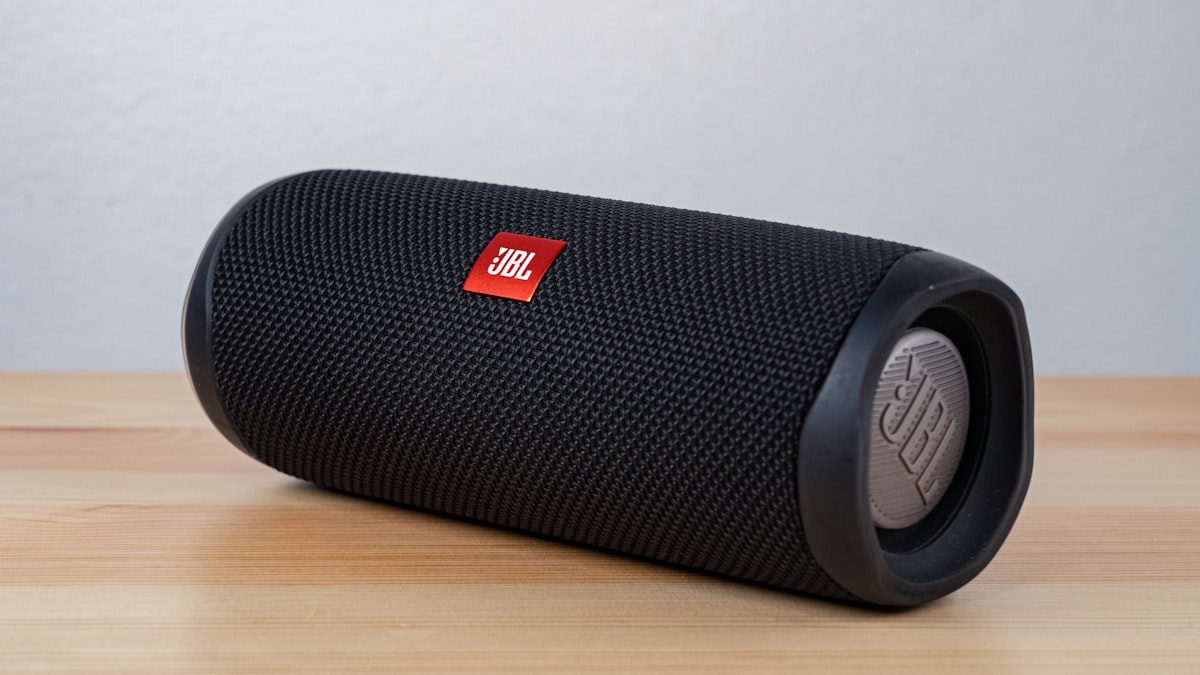
For context, JBL and Bose set the Western benchmark for brand recognition and refinement. They are good, but the Chinese trio above regularly matches or beats them on sound-per-dollar, which is why I recommend them first.
What I learned living with them
The Tribit medium speaker became my default because it filled a room without harshness and ran a full day on a charge. The EarFun model I kept by the bed for podcasts — its tuning was easy on the ears at low volume. Latency on both was fine for video and acceptable for casual games; if you play timing-critical mobile games, use wired headphones instead, because no Bluetooth speaker will be perfectly tight on an iPhone. Stereo separation was a pleasant surprise on the larger units when placed correctly.
What latency actually feels like
Latency gets discussed as a spec, which hides how it behaves in practice. On an iPhone, audio travels over AAC, and there is an unavoidable delay between the phone rendering a sound and the speaker producing it.
For podcasts and music, none of this matters. Audio and video are not meant to line up, so your brain tolerates a tenth of a second without complaint.
For video, a delay of roughly 100 to 150 milliseconds is where lip-sync starts to feel wrong. Most decent speakers land inside that window, which is why watching a show on a phone paired to a speaker is usually fine.
For rhythm games, the threshold is far tighter. Beat matching depends on the sound arriving when your finger expects it, and roughly 150 milliseconds is the gap between playing and flailing. If your library is built around timing games, wired headphones are the honest recommendation, and no Bluetooth speaker under $200 will fix this.
The workaround worth knowing: many games include a calibration step that shifts audio timing. Run it with the speaker connected and the game becomes playable. It is not perfect, and it will not satisfy a competitive player, but it turns an unplayable title into a reasonable one.
The iPhone-specific details that get missed
There is no aptX. iPhones do not expose low-latency codecs, so a speaker advertising aptX LL gives you nothing. Ignore that line on the spec sheet; you are paying for a feature you cannot use.
AirPlay is rare on portable speakers. Do not assume it. Bluetooth is the connection you will actually use, and it comes with the latency above.
Multi-point pairing is more useful than it sounds. The ability to hold your laptop and your phone at once means you do not have to unpair when a call comes in.
Find My support is absent. Portable speakers get left behind. A cheap Bluetooth tracker stuck to the base solves it better than any app.
Charging matters more than the ports. USB-C is standard now, but check whether the speaker can play while charging. Some throttle or hiss when plugged in, which ruins the point of a desk speaker.
Volume, distortion, and the honest limits of physics
A speaker that fits in a palm cannot produce deep bass, and any listing promising it is describing a boosted mid-bass hump rather than real low frequency extension.
That is not necessarily bad. A boosted hump makes pop and electronic music sound fuller at low volume, which is exactly the use case for a desk speaker. The problem appears when you push the volume: the hump turns into distortion and rattles the enclosure before the mids get loud enough to matter.
The practical rule is to size the speaker to the room. A palm-sized unit is for a desk, a hotel room, or a bike. A medium unit is for a bedroom, a small kitchen, or a picnic blanket. A party-class unit is for a garden with eight people. Buying the party unit for a desk means never using more than a fifth of its output; buying the desk unit for the garden means distortion at the volume you actually need.
Stereo separation is worth a thought too. A single speaker is mono, no matter the marketing. Pairing two identical units gives you genuine left and right, which is a bigger upgrade for movies than any equaliser setting.
Battery expectations, set honestly
Manufacturers quote battery life at roughly half volume with the lights off and no bass-heavy content. Real use burns faster.
A reasonable planning figure is 60 to 70 percent of the quoted number. A speaker claiming 24 hours is realistically a 15-hour speaker, which still covers a full day. A speaker claiming 10 hours and reaching only 6 is the one to avoid, and the reviews will say so if you read beyond the first page.
Two other battery facts matter. First, batteries degrade; a unit that runs 15 hours new may run 11 after two years. Second, a speaker with a replaceable battery is worth a premium if you intend to keep it, and most sealed units are not designed to be opened.
Comparison table
| Speaker | Size class | Battery feel | Sound character | Price range |
|---|---|---|---|---|
| Tribit medium | Medium | All-day | Bass-forward | $40 – $80 |
| EarFun small/medium | Small–medium | Long | Balanced, easy | $25 – $60 |
| Mifa rugged | Medium | Long | Even, outdoor | $35 – $75 |
| JBL (context) | Medium | Good | Refined | $80 – $150 |
Pros and cons
Pros of Chinese acoustic speakers
- Sound quality that punches above the price
- Long battery life in the medium class
- Rugged, waterproof options for outdoors
Cons
- Brand support is thinner than JBL/Bose
- App ecosystems are inconsistent
- Bass can be boosted to a fault on some models
Buying advice
Match size to use: desk and travel favor the small EarFun; shared rooms and picnics favor the Tribit medium; rough outdoor use favors Mifa. Check the IP rating if it will see water or dust — IPX7 is the figure I look for. I would start with a Tribit or EarFun in the size you need, confirm AAC support, and only spend JBL/Bose money if you specifically want the brand or the most polished app. For gaming latency, keep headphones handy for the tightest titles.
FAQ
Why does my speaker lag on iPhone games? iPhones use AAC over Bluetooth, which adds more latency than aptX Low Latency found on some Android gear. Use wired headphones for rhythm games.
Is a Chinese speaker as good as JBL? In the medium class, Tribit and EarFun often match JBL on raw sound for far less money. JBL wins on polish and support, not always on sound.
How long should the battery last? A good medium speaker should run a full day of casual use. If yours dies in two hours, the cell or the rating is suspect.
Disclosure: if you order through our link, TechMinds may earn a small commission at no extra cost to you.