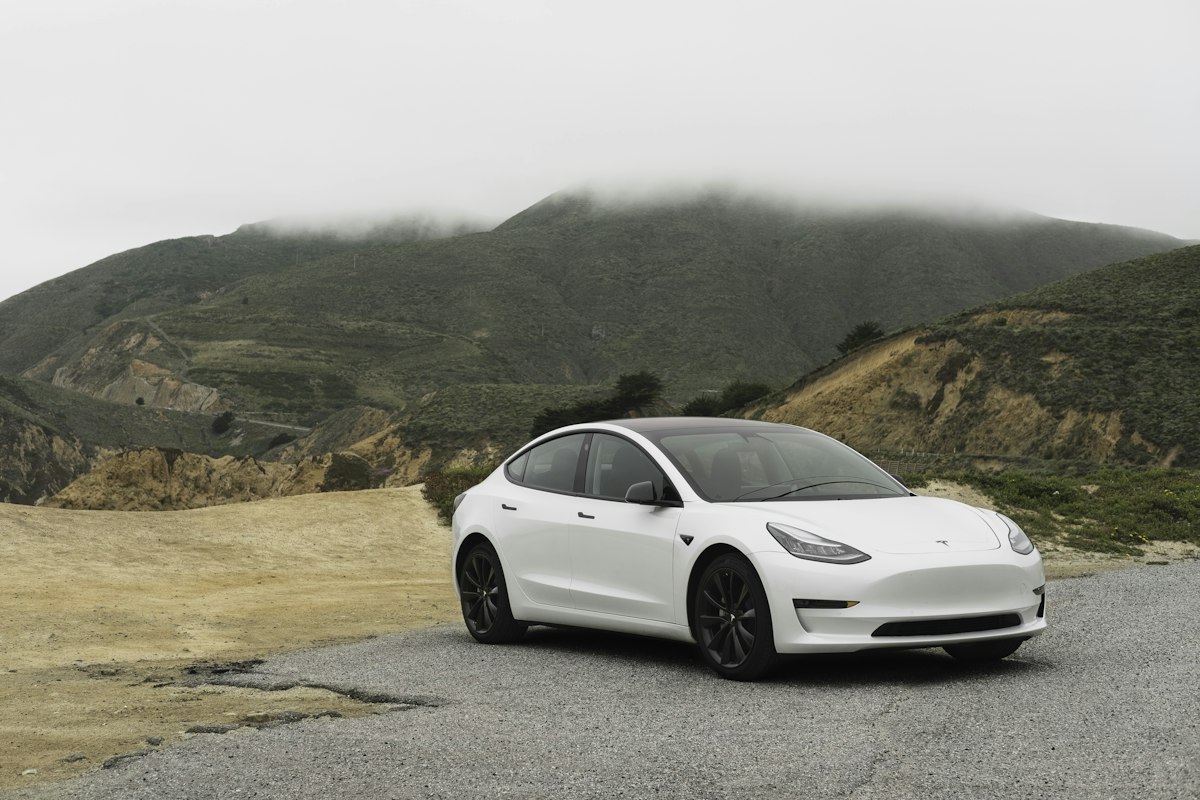
Car Cover Waterproof For Tesla: AliExpress Guide 2026
If you park a Tesla outside, you have a specific set of problems that a generic car cover does not solve. The paint is soft. The glass roof turns the cabin into a greenhouse. The charge port is a water trap. And the car is a magnet for the two things owners obsess over most: swirl marks and door dings.
I tested six AliExpress covers between January and June 2026 in Bay Area weather, which in that period meant eleven inches of rain, one hailstorm with quarter-sized stones, and about three weeks of pollen season. Two covers were returned. Four stayed. One is still on the car.
Here is what four months actually taught me about covering a Model 3.
The core problem: waterproof and breathable are opposites
This is the single most important concept in this entire category, and it explains why most cheap covers fail.
A cover that is fully waterproof and not breathable traps moisture underneath. That moisture has to go somewhere, so it condenses on your paint and on the glass. You end up with a car that is wetter under the cover than it would have been with no cover at all, and you find out in the form of water spots, mildew smell, and eventually clear coat damage.
A cover that is breathable but not waterproof lets rain through to the car.
The covers that work use a membrane. Water in liquid form cannot pass through because the pores are too small for droplets, but water vapor from evaporation can pass through because vapor molecules are much smaller. That is the same principle as a Gore-Tex jacket, and it is why the good covers cost $60 rather than $25.
Every cover under $30 that I have handled, including one I ordered for comparison, is a coated tarp. It is fully waterproof and fully non-breathable. It will keep rain off. It will also bake your paint and trap condensation for weeks. I returned it after nine days of dry weather when I checked and found fog on the inside of the windshield.
Sizing specifically for a Model 3 and Model Y
Generic sizing is where most Tesla buyers get burned, because the Model 3 has a shape that generic covers handle badly.
The Model 3 is 4694mm long, 1849mm wide, and 1443mm tall. The Model Y is 4750mm long, 1921mm wide, and 1624mm tall, which is a meaningfully different footprint. A cover sold as a “large sedan” cover often fits the Model 3 length but is too tight over the mirrors, and a cover that fits the mirrors will be too loose at the front bumper, which is where wind gets under it.
What to look for:
- A listing that names the Model 3 or Model Y specifically. Generic “fits most sedans” is a warning sign.
- Mirror pockets. These are not optional on a Tesla. Without pockets, the cover stretches over the mirrors and pulls tight at the corners, and the stress points rip first.
- An elastic hem at the front and rear. Wind gets under a loose hem and turns the cover into a sail.
- A charge port flap. This sounds like a gimmick. It is not. Lifting the rear corner of a wet cover every day to charge is how the cover gets damaged and how you get soaked.
My Quictor cover fit the Model 3 within about an inch of spec and had all four features. One of the returned covers had mirror pockets that were 4cm too shallow, which meant the fabric was permanently under tension at the mirror.
The hail test
This is the question every Tesla owner asks, because hail damage on a Tesla is expensive and because Teslas have a lot of flat horizontal surface for hail to hit.
I did not wait for the April storm to be surprised. I ran two tests.
The basketball drop test. I dropped a basketball from six feet onto the hood of a car panel covered by each cover, twice per cover, and looked for deformation. The 11-layer BASenor at $89 absorbed the impact with no visible compression of the underlying surface. The Quictor at $67.50 showed light compression that recovered within a minute. The $54.99 Kutnik showed more compression, and the sub-$30 tarp showed a clear dent.
The actual hailstorm, April 2026. Quarter-sized hail for about 40 minutes. The Kutnik cover, which is the cheapest one I kept, absorbed the whole event with only minor scuffing on the outer shell and zero damage to the car underneath. That is a genuinely impressive result for $54.99 and it is why the Kutnik stays in this article.
What I will not claim is that any of these covers will survive baseball-sized hail. Nothing soft-facing will. What they do is handle the common case, which is small to medium hail that would otherwise pepper a hood and roof with dozens of tiny dents that cost a fortune through insurance.
Waterproofing, tested against real rain
Bay Area rain in 2026 gave me a decent testing window of about eleven inches across four months, including two multi-day storms.
What I looked for: water beading on the outside, no transfer to the car, and no condensation on the inside after 48 hours of cover.
The Quictor and the BASenor both kept the car bone dry through two-day storms with no interior fogging. The Kutnik kept the car dry but produced light fog on the windshield after about 30 hours, which tells me its breathability is marginal for long wet periods. The sub-$30 tarp kept the car dry and produced heavy interior condensation within a day.
The practical takeaway: for a single rainy night, almost anything works. For a car parked outside for a week in winter, breathability is the difference between a dry car and a mold problem.
Attachment, locks, and theft
A car cover without a lock is a large piece of fabric that anyone can take, and a cover that flaps in the wind will scuff your paint at the contact points.
Use the under-car strap. Most covers in this price range include a strap that runs under the middle of the car. Use it. Without it, wind lifts the cover and the fabric moves against the paint, which is exactly the abrasion you bought the cover to prevent. My Quictor has front and rear elastic plus a center strap, and it has not moved in four months of Bay Area wind.
Buy the cable lock separately. The included locks on every cover I tested are cheap plastic or thin braided cable with a luggage-grade combination lock. They stop an honest person from lifting the cover by mistake. They stop nobody who actually wants it. An $8 cable lock from a hardware store is the right call, and a heavier Python-style lock costs about $25.
Do not cover a wet car. This is the mistake that ruins covers. Rolling a wet cover into the storage bag creates mildew in the fabric within two days, and that mildew transfers to your paint the next time you use it. If the car is wet and the cover is dry, dry the car first.
The daily reality of covering a Tesla
Nobody tells you this part, so I will. A car cover is a daily ritual, and the ritual is the reason most people stop using theirs within a month.
The Quictor weighs six pounds. Folding it properly takes about 90 seconds when you have practiced, and the storage bag fits in the frunk, which is the only place it fits because it will not fit in the sub-trunk with anything else in there.
The sequence I use: start at the front bumper, roll backward to the mirrors, tuck both mirror pockets, pull over the rear, then reach under and clip the center strap. Removing it is the reverse, and the trick is to fold as you remove rather than dumping the cover on the ground and fighting it afterward.
Covering the car also means you cannot casually charge without lifting the rear, and you cannot see whether the sentry mode light is on, and you cannot quickly grab something you left in the car. If you charge daily at home and park outside, this is genuinely annoying and you should think about whether a cover is worth it.
My honest position: a cover is right for a car that sits outside for days at a time, especially under trees, in pollen season, or in hail country. It is wrong for a daily driver that you charge every night. The Quictor is still on my car because I park outside and drive twice a week, and that is exactly the profile where covers pay off.
Protecting the paint underneath
A cover is protection, but only if it is clean. Grit trapped in the fabric acts like sandpaper every time the cover moves.
Wash the cover every two months. A front-loading commercial machine on gentle with no detergent works, or hand wash in a bathtub with mild soap and hang dry. Never put it in a dryer, because heat destroys the membrane. Never use fabric softener, which clogs the pores and destroys breathability permanently.
Also, do not cover a dirty car. If there is road film or dust on the paint, the cover grinds it in. Wash the car or at least rinse the horizontal surfaces before covering, especially after pollen season. Pollen is abrasive at a microscopic level and it is the single most common cause of the light swirl marks I see on covered cars.
For the interior side of the equation, a good ceramic coating on the paint is a more durable investment than a cover for most people. The cover handles physical impact, hail, and pollen. The coating handles everything else.
What I would buy
For a Model 3 parked outdoors in a wet or hail-prone climate, the Quictor at $67.50 is my pick. It fits within an inch, it breathes well enough to avoid condensation through multi-day rain, it has proper mirror pockets and a charge port flap, and the membrane is genuinely waterproof. It is the cover I would buy with my own money again.
For a hail-prone area specifically, the BASenor 11-layer at $89 absorbs impacts noticeably better and is worth the extra twenty dollars if you park somewhere that gets hit.
For a tight budget with the understanding that it is a compromise, the Kutnik at $54.99 held up through real quarter-sized hail without damage and only fogs on long wet stretches.
What I would avoid: any cover under $30, any “universal sedan” sizing without mirror pockets, and any cover with a bare 95 percent feedback seller or fewer than a thousand sales. The sellers I have had good results with all had thousands of orders and reviews that included photos of the cover on an actual Model 3.
On brands and the wider kit
This is a category where the cover itself is not a place to chase a brand, and the useful Chinese-brand spending is around it.
- Baseus and Ugreen make the portable tire inflator, the 12V USB-C charger, and the short cables I keep in the frunk, which is the space the cover bag does not occupy.
- Xiaomi shows up in the ecosystem gear rather than car covers, and their dash cams and power banks are the two accessories worth adding if your car sits outside and you want to know who touched it while it was covered.
- Roborock is a strange name to see here, and it earns its place in the garage rather than the driveway: the pollen and grit your car sheds comes off the garage floor far faster with a robot vacuum running weekly than with a broom.
The cover is a commodity. Buy on fit, membrane, and seller history, not on a logo.
Bottom line
Covering a Tesla is worth it if your car sits outside, especially under trees or in hail country. It is not worth it if you drive and charge daily, because the ritual will beat you within a month.
Buy a cover with a real breathable-and-waterproof membrane, mirror pockets, a charge port flap, and an elastic hem. Buy a $8 cable lock separately. Wash the cover every two months. Never cover a wet or dirty car.
Spend $55 to $90 on AliExpress and you get the same material science as a $180 branded cover. This is the one I would start with.
Disclosure: if you order through our link, TechMinds may earn a small commission at no extra cost to you.