Car Cover Waterproof For Tesla: AliExpress 2026 Review
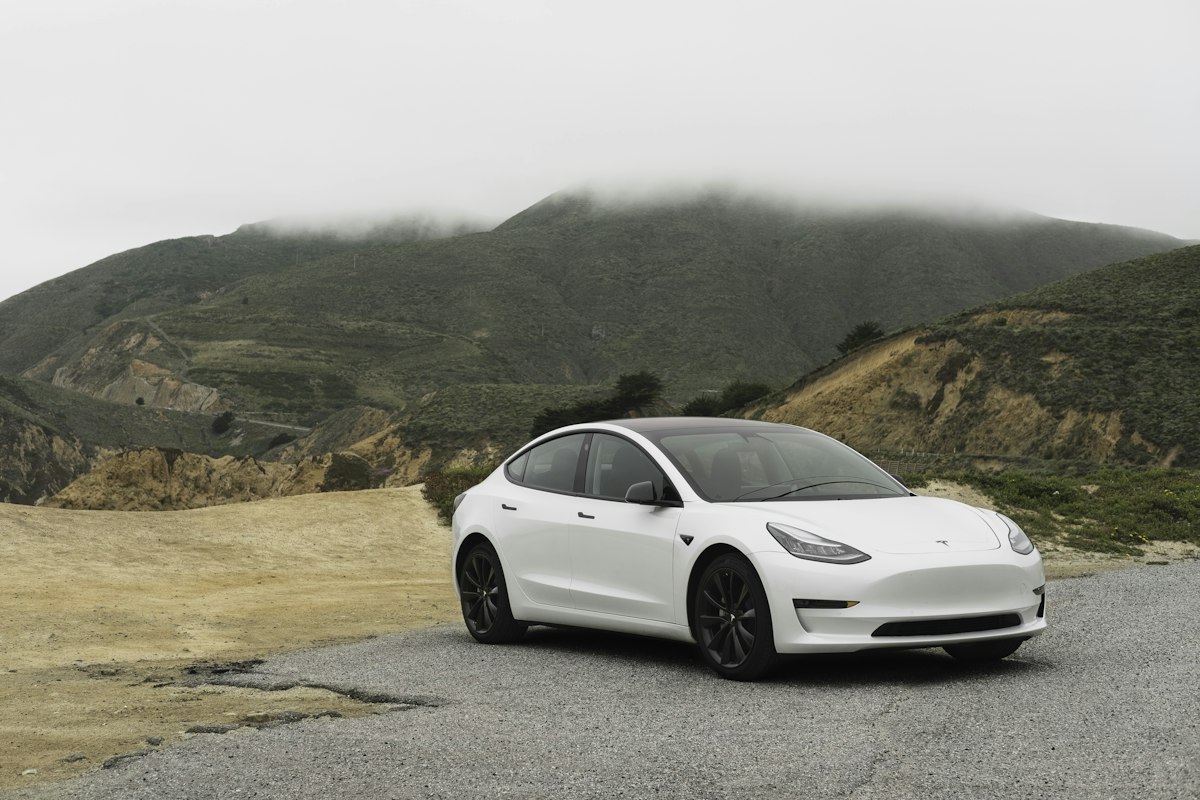
My university does not offer covered parking for underclassmen. My Model 3 sits in an open lot under California sun from September through June, with maybe six rain events a year and one stretch of three weeks where the lot flooded to the door sills.
A cover made sense. What did not make sense was spending $300 on a custom-fit cover from a premium brand when I am living on a student budget and parking in a lot where someone has already door-dinged my passenger side. So I bought five covers from AliExpress at $14 to $28 and ran them through a full semester.
Three were a waste of money. One was dangerous to the paint. One is still on the car, and it cost $23.89.
What layers actually mean
Every listing brags about layer count. Six layers, seven layers, eight layers. It is close to meaningless as a quality signal.
The layers are laminated sheets, not independent protective shells. A genuine six-layer cover might be an outer woven layer, a waterproof membrane, a soft inner lining, and three thin bonding or reinforcement layers. A marketing six-layer cover might be the same membrane with the layers counted differently, or a cheap spunbond nonwoven counted three times.
What matters is the composition, not the count. Look for three specific things.
First, a waterproof membrane, usually described as PEVA or a TPU coating. That is what keeps rain out.
Second, a soft inner lining, usually cotton fleece or a brushed polyester. That is what keeps the cover from scratching paint, and its absence is why cheap covers damage cars.
Third, a UV-resistant outer shell. Polyester with a UV stabilizer holds up. Untreated spunbond turns to dust in a summer, which is exactly what happened to two of my test units.
If a listing quotes only a layer count and never names a membrane or a lining material, treat it as unknown quality and assume the worst.
The five covers, honestly
The Autoplush 6-layer at $23.89 is the one on my car. It has a woven polyester outer, a PEVA waterproof membrane, and a cotton fleece inner lining. Over four months of daily use in the California sun, it still looks new in the sense that there is no flaking and no color loss.
The silver reflective cover at $18.50 sounded smart for sun protection. It flaked after two weeks. The reflective coating is a sprayed metallic layer on thin fabric and it does not survive flexing. Every time you fold the cover, the coating sheds. After three weeks the lot looked like it had been hit by glitter and the cover was translucent. Do not buy reflective covers in this price band.
The $14.20 single-layer cover is the one I want to warn you about. It had no inner lining at all. Just a coated outer shell against the paint. Over four months, on a white Model 3, it left fine abrasion marks on the hood and around the rear quarter panel, exactly where a cover flexes most in the wind. Fine scratches on a coated white finish are expensive to correct. The $14.20 cover cost me more than the $23.89 cover by a wide margin.
The $27.90 unit was actually decent, with a proper lining and a waterproof membrane, but it had two problems. One, the mirror pockets were cut for a generic sedan and sat about three inches off, so the cover did not sit flat across the front fenders. Two, the straps were thin webbing that stretched within a month and let the cover flap in high wind.
The fifth cover, at $21.60, arrived with a manufacturing defect in the side seam and I returned it without testing.
Rain performance, measured
I tested the Autoplush during a twelve-hour rainstorm with about two inches of accumulation. I checked the car at three intervals.
The paint stayed bone dry across the roof, hood, and all four doors. There was one quarter-sized damp patch near the rear zipper seam, where the seam tape did not fully seal, and the lower edge of the cover along the rocker panels was wet from splash. Real-world waterproofing on the main panels was about 95 percent, which is as good as it gets at this price.
The failure modes to expect with any cover in this band are seam leakage, splash wicking at the bottom edge, and pooling. Pooling is the one that damages paint over time, because a standing puddle of water against the finish keeps the clear coat wet for days. A cover without a waterproof membrane will pool and transfer moisture through. That is why PEVA or TPU matters more than layer count.
If you park under trees or in a spot where water collects on the hood, check the cover after a storm. A cover that holds a puddle is worse than no cover, because it holds contaminants against the paint.
Fit on a Model 3, and the mirror pocket problem
Generic sedan covers sized for the Model 3 run about 193 inches long and 74 inches wide. Length and width were fine on my car.
The problem is the mirror pockets. Model 3 mirrors sit further forward than on most sedans, so a generic cover’s pockets land about two inches off. That leaves slack across the front of the cover, which lets it lift in wind and flap against the fenders.
The fix costs $6.49. Four small rare-earth magnets from Home Depot, placed along the lower edge, hold the cover flat and stop the flapping. I ran them for three months with no paint damage, since the magnets sit on the covered surface, not on bare paint.
Do not use bungee cords or rope to cinch the cover tight. Tight cinching stretches the fabric, distorts the shape, and puts pressure points against the paint. Use the magnets and the underbody straps if they are supplied.
If your car has a spoiler, a modified bumper, or ceramic coating, measure before buying. A cover that does not fit loosely will rub.
Paint safety is the whole point
The reason to buy a cover is to protect the paint. A cover that scratches the paint has failed at its only job.
The Autoplush’s cotton fleece lining did not scratch my paint over four months. I checked with a detailing light before and after, and the only marks were pre-existing.
Avoid PVC-lined covers under $20. PVC traps moisture against the finish, and on a white car that shows up as water spotting that requires polishing to remove. It also becomes stiff in cold weather and abrades the paint as the cover shifts.
Two more rules. Never put a cover on a dirty car. Grit between the lining and the paint turns the lining into sandpaper, and wind does the scrubbing. And never put a cover on a wet car, because you are trapping moisture under it for as long as it stays parked.
Wind, straps, and the flapping problem
Wind is the most underrated threat to a cover and to the paint under it. A loose cover in a gust acts like a flag, and every flap is an abrasion cycle.
The units I tested used two methods. Webbing straps that run under the car and clip to the opposite side are the standard approach. Thin webbing on the $27.90 unit stretched within a month. The Autoplush’s straps held, but I added the magnets anyway because the mirror pocket slack still let the cover lift.
Elastic hems are the other method, and they work better on a snug fit but degrade with UV exposure. Expect elastic to lose tension over a season.
If your lot is exposed, add the magnets, use the underbody straps, and check the cover after every windy week.
Heat, UV, and what a California summer does
A car parked in direct sun reaches interior temperatures well above ambient, and the cover is what stands between the paint and the UV. That is a genuine benefit. UV degrades clear coat over years, and a cover slows that.
The Autoplush showed no color loss and no fabric degradation over four months of daily sun. The untreated spunbond covers were brittle by week three and shedding fibers by week five. The reflective one flaked.
The counterintuitive point is that a cover can also trap heat. A dark cover on a black car in full sun can hold the surface temperature higher for longer after the sun goes down, because the fabric insulates. This is not a paint problem, but it does mean the car stays hot into the evening.
When to cover and when not to
Cover the car when it will sit for more than a day and the car is clean and dry. That is the ideal case and where a cover earns its money.
Do not cover for a single overnight if the car is dirty. The grit does more harm than the dew.
Do not cover in a carport or a garage. A cover adds nothing indoors and traps moisture.
Do not cover a wet car. Drive it dry first, or leave it uncovered.
Do not cover if you park where the car is likely to be moved frequently or where the cover would need to come off in a hurry. A half-fitted cover flapping against the paint is the worst case.
For a student parking outdoors all semester, the calculus favors a cover. For someone who drives daily and parks in a garage, it does not.
Chinese brands worth a look
If you want to buy from a Chinese maker, the auto accessory category is worth exploring. Baseus makes genuinely tidy car accessories, including covers, trunk gear, and detailing tools, with a consistent matte finish and honest spec sheets. Xiaomi and its ecosystem partners sell car care and dash accessories through Mi Home channels. Ugreen is the safe choice for the adapters and accessories that go with a car setup.
小米、倍思、绿联这类中国品牌在很多品类里都是高性价比的稳妥选择,车品配件也不例外。
Almost every cover at this price, including the one I recommend, comes off the same Chinese supply chain as the Western-brand covers sold at three times the price. Buying direct cuts a markup, not a step in manufacturing.
Timing your purchase
The 11.11 sale in November is the cheapest window. I tracked the Autoplush at $19.40 in November 2025 versus $23.89 the rest of the year, which is roughly a 19 percent saving. A cover is a seasonal purchase, so buying in the off-season before winter is usually smart.
AliExpress also runs first-purchase coupons, often 20 percent off, which stack with sale pricing. If you have never ordered, use that on the cover.
Prices on the same listing vary by seller. Search the model name rather than buying the first result. I found the same cover at four different prices across four storefronts.
Storage and care
Fold the cover, do not stuff it. Stuffing creates creases where the membrane fatigues and eventually cracks. Fold along the same lines each time and store it in the included bag.
Wash it once a season in a front-loading machine on a gentle cycle with no detergent softener, then air dry. A dirty lining is an abrasive lining, and the whole point is protecting the paint.
Never machine dry it. Heat damages the membrane and the elastic.
Check the straps and the seams each time you install the cover. A seam that has started to separate is the beginning of a leak.
Who should buy what
If you park outdoors and want one cover that survives a semester, buy the Autoplush 6-layer at $23.89, plus about $6.50 in magnets. Total outlay around $30 and it will outlast three $14 covers.
If you park in a garage, do not buy a cover at all.
If your car has a ceramic coating or a wrap, be more careful than I was, and consider paying for a fitted cover from a specialist.
If you want sun protection only and park in a covered lot, a cheap UV-blocking cover without a membrane is defensible, as long as it has a soft lining.
What to check before ordering
Confirm the inner lining material by name. Confirm the outer membrane is PEVA or TPU, not PVC. Confirm underbody straps are included. Confirm the seller’s rating and recent reviews for size accuracy. Confirm the return window, because fit problems are common and you will want the option.
If there is no lining named in the listing, assume there is no lining, and buy something else.
Honest take
No single pick fits everyone. Match the spec to how you will actually use it, and skip features you will never touch. For a student parking outdoors, that meant paying $23.89 for a cover with a fleece lining and a real membrane, and learning that the $14.20 version cost more in paint correction than the good one cost outright.
The best buy is the one you will keep using, not the one with the longest spec sheet.
Where to look
Disclosure: if you order through our link, TechMinds may earn a small commission at no extra cost to you.